


The Real Cost of a Burning Man Bike: Why Everyone Tells You to Buy a $50 Beater


Here's the standard advice you'll hear in every Burning Man Facebook group: "Buy the cheapest bike you can find at Walmart for $50, don't clean it, and just abandon it when you leave." Spend ten minutes reading forum posts and you'd think this is the universal truth. But when you actually look at the numbers, the economics get a lot more complicated.

The Myth of the $50 Bike
First, that mythical $50 Walmart bike? It doesn't really exist anymore. Current Walmart cruisers start around $98 for the cheapest Concord Pacifica model, with most running $150-$230. You could potentially find something cheaper at a thrift store, but that requires time and luck most first-timers don't have. Meanwhile, Reno Bike Project sells refurbished bikes specifically prepared for the playa starting at $110—bikes that already have at least one working gear, one brake, and properly adjusted bearings.
So the real question isn't "$50 vs. expensive"—it's "$110 for a beater you abandon vs. $150-200 for something you might actually bring home."
What the Playa Actually Does to Your Bike
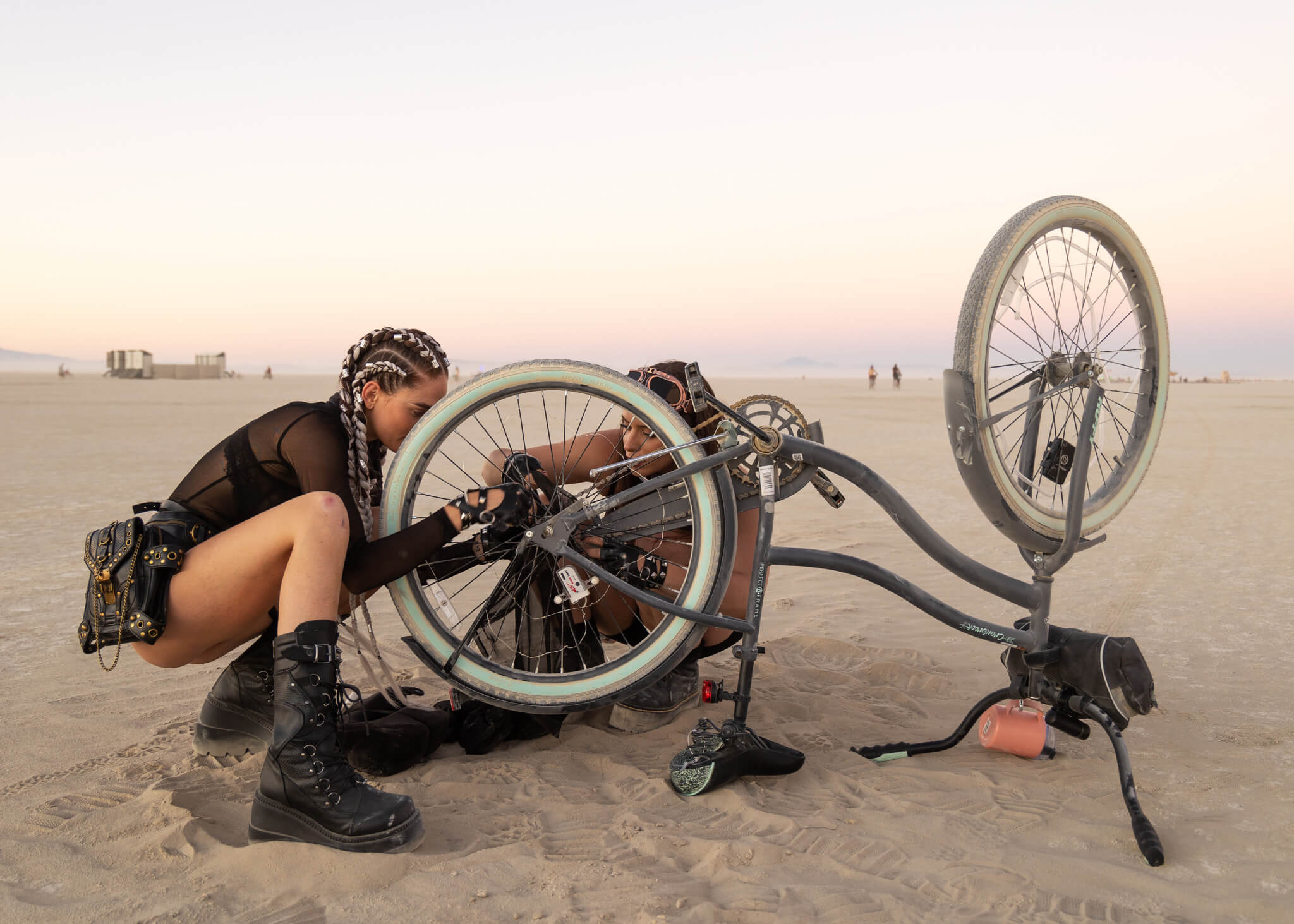
The Black Rock Desert isn't covered in regular dust. The alkaline powder has a pH between 9.97 and 10.21, making it genuinely corrosive when it gets wet. This isn't marketing hype—it's chemistry. The dust works its way into chains, bearings, and gears, and if left uncleaned, it'll seize up your bike within weeks of getting home.
But here's what the "just abandon it" crowd won't tell you: bikes can survive Burning Man if you're willing to do the work. The cleaning process involves removing the wheels, washing everything multiple times with a 50/50 vinegar-water solution, removing the chain to soak it in alcohol or gasoline, and wire-brushing all the gunked-up parts. Figure two to three hours of actual labor. The question is whether that labor is worth it.
The Abandonment Reality
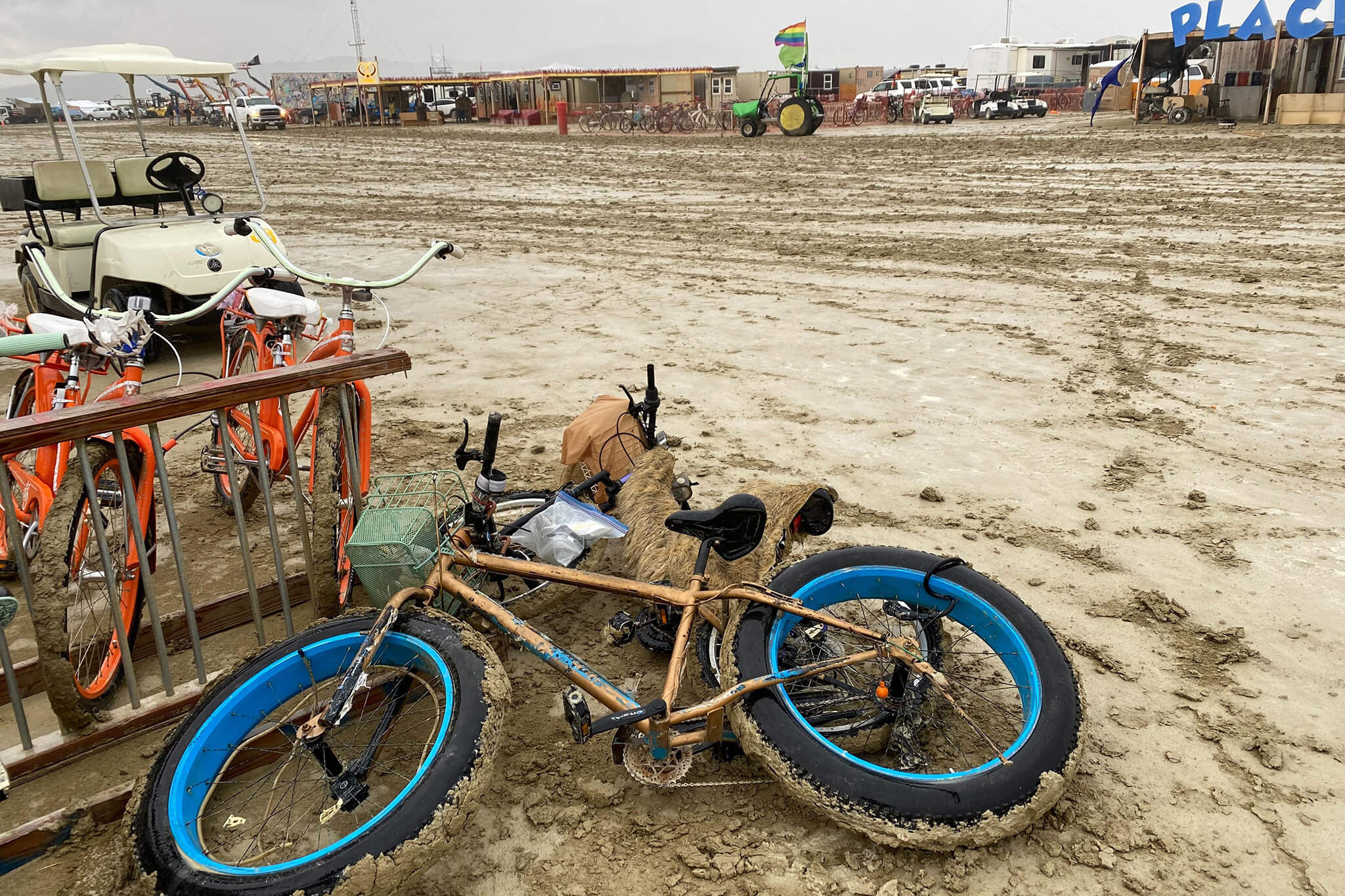
In 2017—the worst year on record—over 5,000 bikes were left behind in what cleanup crews called the "bike apocalypse." That number dropped to the usual 1,000-2,000 in subsequent years, then climbed back to 1,800+ bikes in 2024. These aren't all true abandonments. Some are legitimately lost in the chaos of 70,000 people. Some belong to international travelers who can't bring them home. But a significant number are from people who followed the "buy cheap, leave it" advice because they heard everyone does it.
What happens to those bikes? They don't go to a landfill. Local nonprofits like the Reno Bike Project and Kiwanis collect them, strip off the fur and LED lights, clean them with industrial-level effort, and either resell them to next year's Burners or donate them to communities in need. In 2017, 500 abandoned Burning Man bikes went to hurricane relief efforts in Houston. The Reno Bike Project alone handles 600-700 abandoned bikes annually, refurbishing what they can and recycling the rest.
This creates a weird circular economy. You buy a $110 refurbished bike from RBP in August. You use it at Burning Man. You abandon it (because "everyone does"). RBP collects it, cleans it for hours, and sells it again next August for $110. The bike makes it through this cycle two or three times before it's too far gone and gets parted out.
The Alternative Math
What if you spent $200 on a decent used bike from your local bike shop instead? Something with sealed bearings and a simple single-speed drivetrain. You'd still need to clean it thoroughly post-burn (those 2-3 hours aren't negotiable), but then you'd have a functional bike you could actually use at home.
If you go to Burning Man twice in five years, you're at $100 per trip with a bike you can ride year-round. Compare that to two $110 RBP bikes that you immediately discard. The lifetime cost is similar, but in one scenario you have a bike at the end.
The counterargument is that the three hours of deep cleaning aren't worth your time, especially if you're exhausted post-burn and live somewhere you don't bike much. That's legitimate. But it's worth doing the actual math on your situation rather than blindly following the "buy cheap, abandon" advice because a Reddit thread said so.
What Actually Makes Sense
For most first-timers, the RBP $110 option is probably right. You're not sure if you'll ever go back, you're overwhelmed with packing, and you don't want bike maintenance on your post-burn to-do list. But understand you're not buying a "$50 disposable"—you're buying a $110 contribution to a nonprofit that's going to clean up your choice later.
If you're a repeat Burner or someone who might actually use a bike at home, buying something decent and committing to the cleaning makes more financial sense. The playa dust is corrosive, but it's not magic. Bikes survive if you put in the work.
The "buy a $50 beater" advice isn't wrong because it's bad strategy—it's wrong because it oversimplifies the choice and makes abandonment sound more universal and acceptable than it actually is.