


PhotoCity LA: How a Strip Mall Film Lab Became the Valley's Analog Hub

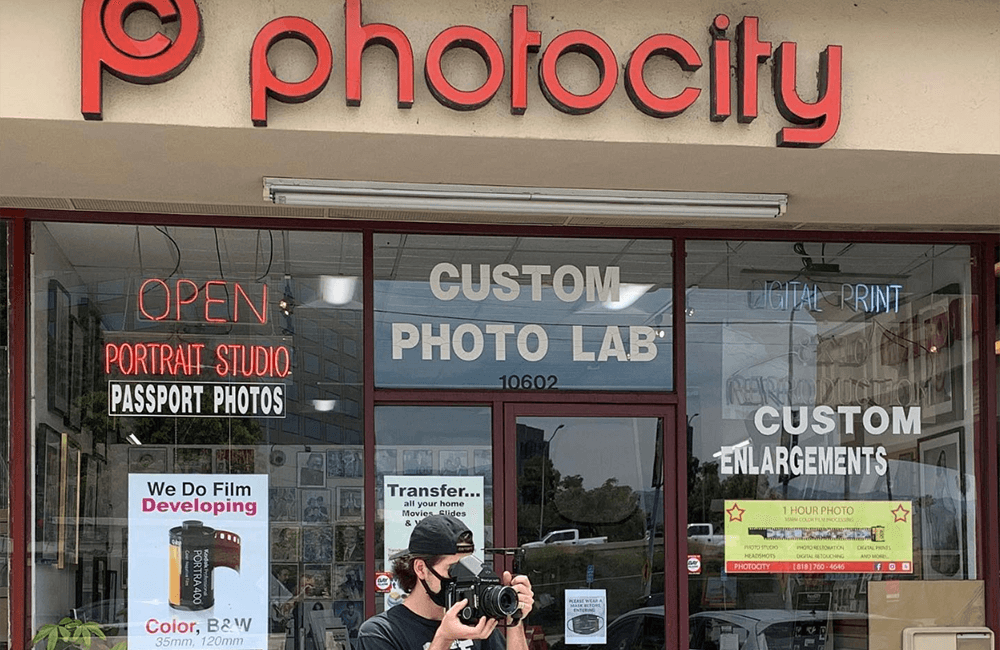
Walk into PhotoCity on Ventura Boulevard and you're greeted by walls covered in celebrity headshots—decades of Hollywood faces staring back from every surface. This isn't a museum. It's a working photo lab that's been developing film in the same Studio City location since 1989, back when digital cameras didn't exist and every production company needed prints yesterday. Owner John has watched the film industry collapse, then resurrect itself, then collapse again. And he's still here, processing 35mm at the same address while newer, trendier labs come and go.
The paradox: PhotoCity survived by refusing to pivot.
The Pre-Digital Foundation
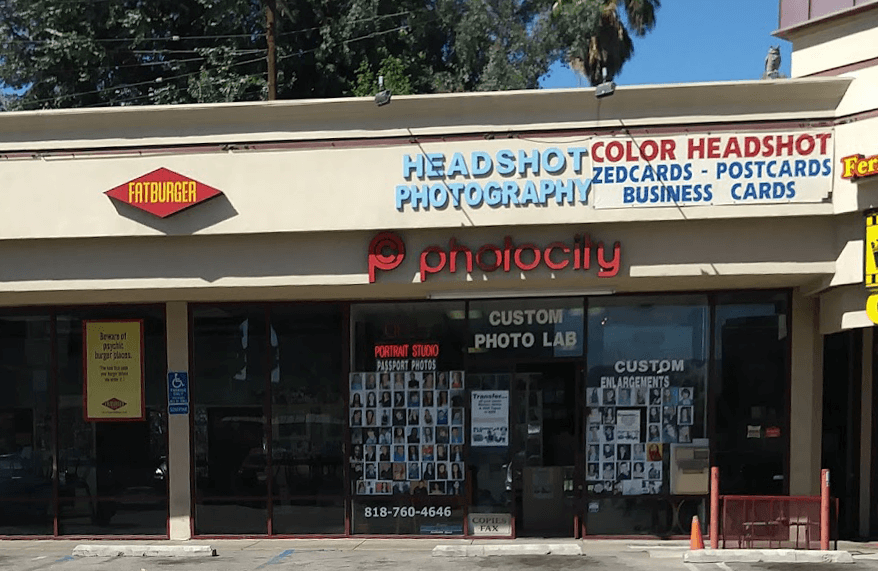
PhotoCity opened in 1989 at 10602 Ventura Blvd, during film photography's peak. The global film market wouldn't hit its maximum until 2003—when manufacturers sold 960 million rolls worldwide—but the Valley was already a processing hub. Studio City sits between Burbank's studios and Hollywood's talent agencies, making it prime real estate for headshot reproduction and rush film jobs.
The lab's original business model centered on entertainment industry headshots: actors needed 8x10s for auditions, agencies wanted same-day turnaround, and everyone paid in cash. PhotoCity specialized in the unglamorous work that kept careers moving—passport photos, photo restoration, video transfers. By the mid-2000s, when digital photography began decimating film labs across Los Angeles, PhotoCity had built enough headshot clientele to weather the transition.
But it was a close call. The photographic film market represents roughly 2% of its 2003 peak today, according to Fujifilm's imaging division. Most neighborhood labs shuttered between 2005 and 2015. PhotoCity stayed open by diversifying into digital services while maintaining its film processing equipment—expensive machines most labs sold for scrap.
What Actually Happens at PhotoCity Today
The 2025 reality: PhotoCity processes both 35mm and 120mm film in color and black-and-white, offers same-day service without rush charges, and still prints headshots for actors. Hours are Monday-Friday 9am-7pm, Saturday 10am-5pm, closed Sunday. The walls remain covered in celebrity headshots from three decades of Hollywood photography.
Current customers fall into two camps. First: the original entertainment industry clients who never stopped shooting film. These are cinematographers testing stock, photographers who prefer analog for certain commercial work, and older actors accustomed to film headshots. They appreciate that John knows their names and understands urgency.
Second camp: the film revival generation. Between 2020 and 2024, Kodak's film sales surged 20% driven by millennials and Gen Z discovering analog photography. The global photographic film market, valued at $2.86 billion in 2024, is growing at 5% annually. These younger photographers want fast turnaround and knowledgeable staff—PhotoCity delivers both.
Standard film development in Los Angeles runs $10-20 per roll for 35mm, slightly more for 120mm format. PhotoCity's pricing sits within this range, competitive with newer labs like LA Film Lab and competing primarily on speed and service rather than price.
The Complications Nobody Mentions
PhotoCity's survival creates an interesting tension: it succeeded by not chasing trends. While boutique labs positioned themselves as artisanal film havens with Instagram-friendly branding, PhotoCity remained a workmanlike photo lab in a strip mall. The aesthetic is functional, not curated. This matters less than you'd think.
The celebrity headshots covering the walls tell a different story than most film revival narratives. These aren't hobbyists discovering Kodak Portra for the first time—they're professionals who used the same lab in 1995, 2005, and 2025. PhotoCity's longevity comes from serving people who never stopped needing film services, not from capitalizing on the analog renaissance.
There's also the location factor. Studio City's positioning between major studios means PhotoCity serves a captive professional market that newer LA labs in Silver Lake or Downtown can't easily access. Geography matters more than marketing when your clients need same-day headshot prints.
The film revival is real—over 20 million rolls sold globally in 2023, up 15% from 2022—but PhotoCity's business model predates and doesn't entirely depend on it. The lab would exist with or without TikTok film photographers.
Why This Actually Matters
PhotoCity represents something rare in 2025 Los Angeles: a business that survived disruption by staying exactly what it always was. While the film photography market contracted by 98% between 2003 and 2020, PhotoCity kept its equipment running and its knowledge intact. When demand returned, the infrastructure still existed.
For photographers: PhotoCity offers fast turnaround (often same-day), professional service from staff who've seen thousands of rolls, and hours that accommodate working schedules. The trade-off is atmosphere—this is a functional lab, not an experience.
The broader lesson applies beyond film. PhotoCity succeeded because John maintained expertise and equipment through the lean years. When the market shifted back toward film, most labs had closed. The few that remained—including PhotoCity—gained disproportionate value from simply still existing. Sometimes the best business strategy is persistence.