


5 Photogenic Towns in Crete That Locals Actually Visit (Not Just Chania)

Chania's Venetian harbor gets 40,000 visitors daily during peak season, and for good reason—those pastel buildings reflected in the water are legitimately stunning. But Crete has dozens of equally photogenic towns where you're more likely to hear Greek conversation than tour-group announcements. Here are five places where locals still outnumber the Instagram crowd, each offering something you won't find in the postcard rack.
1. Rethymno: Venetian Streets Without the Chania Crowds
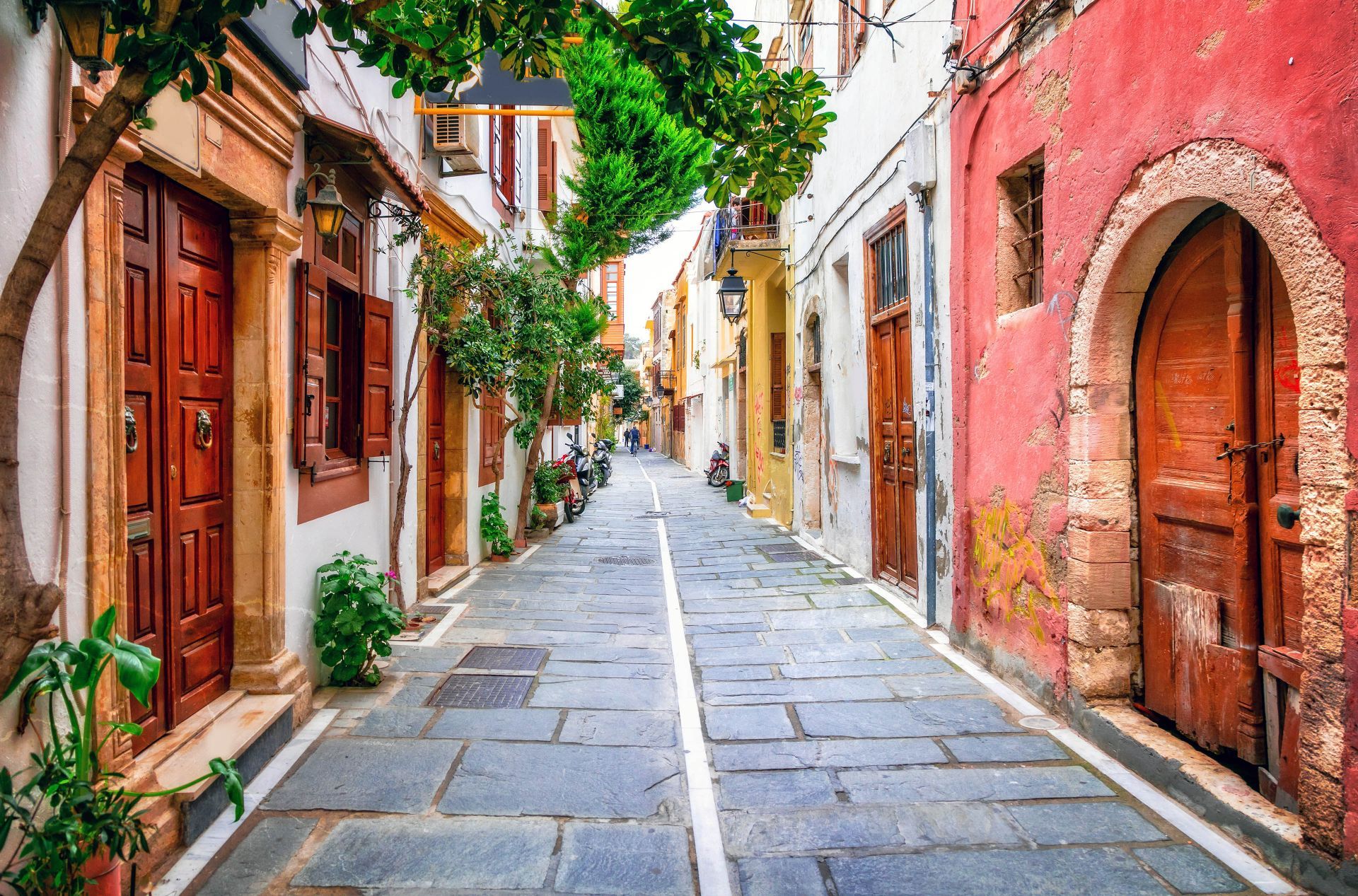
Between Chania and Heraklion sits Crete's third-largest city, where 32,500 residents still live and work among 16th-century buildings. The Fortezza fortress dominates the skyline (€5 entry, open 9am-sunset), and while tourists definitely visit, the rhythm remains distinctly local. Mikrasiaton Square—named for the 1923 population exchange—is where Cretans actually congregate, not just where they pose for photos.
The real draw is the off-season accessibility. Visit April-June or September-October and you'll find shops open, restaurants full of locals, and streets quiet enough to appreciate the architectural mashup of Venetian doorways and Ottoman mosques. The Municipal Market runs Saturdays at the bus station; it's 95% clothes, but the energy is pure working-town Greece rather than sanitized heritage site.
2. Agios Nikolaos: Lake Views Without the Medieval Baggage
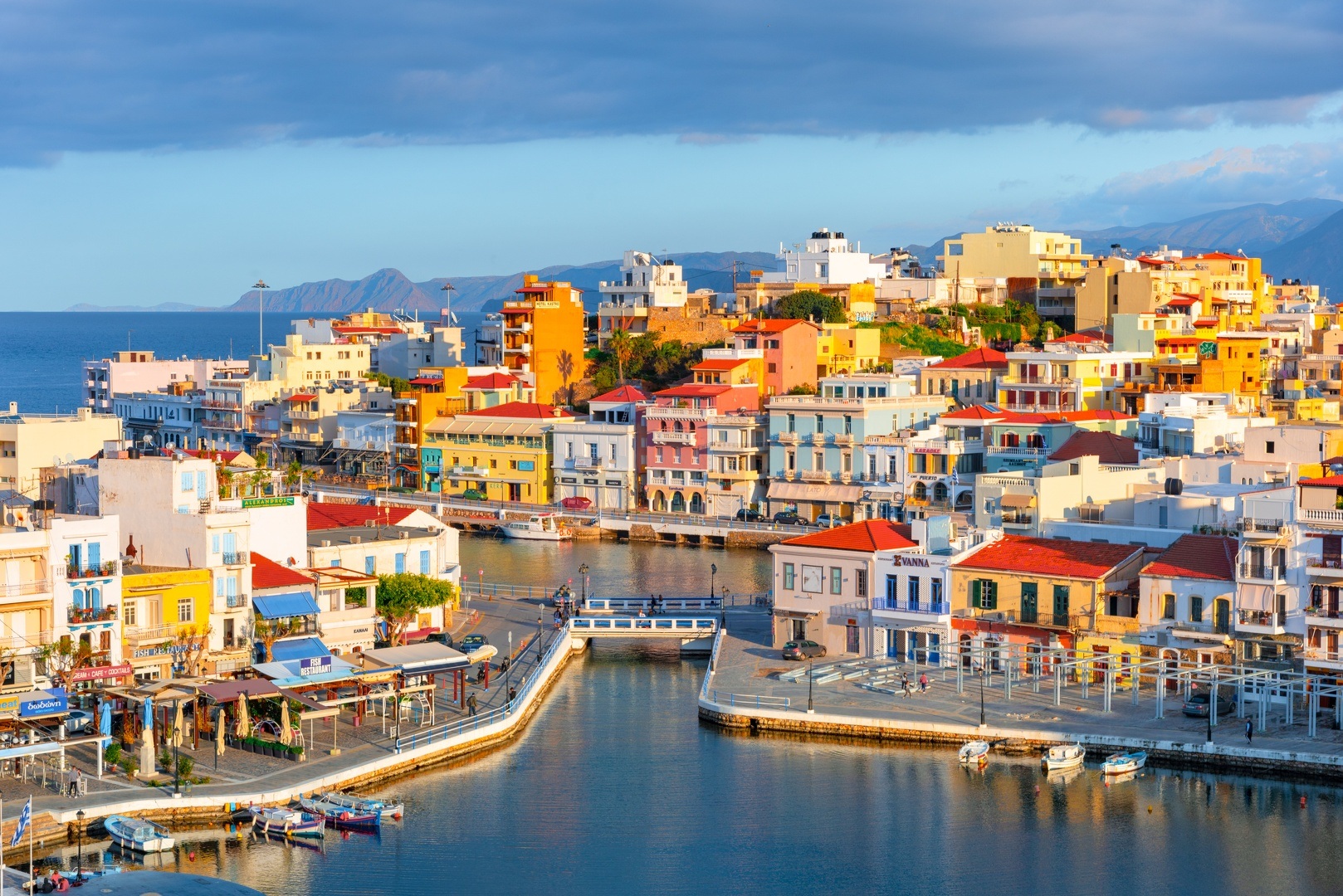
Unlike most Cretan tourist towns, Agios Nikolaos (population 12,000) has virtually no historic old town to show off. What it does have is Lake Voulismeni—a 64-meter-deep saltwater lagoon connected to the sea by a narrow channel, ringed by cafes where locals actually sit and drink coffee for hours, not just snap photos and leave.
The vibe here is "working town that happens to have tourism" rather than "historic monument that tolerates residents." Wednesday is market day at the hospital car park. The waterfront stretches in both directions for easy walking, and the Archaeological Museum (€4, closed Tuesdays) contains genuinely significant Minoan artifacts without the Heraklion crowds. Kitroplatia Beach sits right in town—free to visit, though sunbed rental runs €10-15.
3. Plaka: Working Fishing Village That Happens to Have Perfect Views
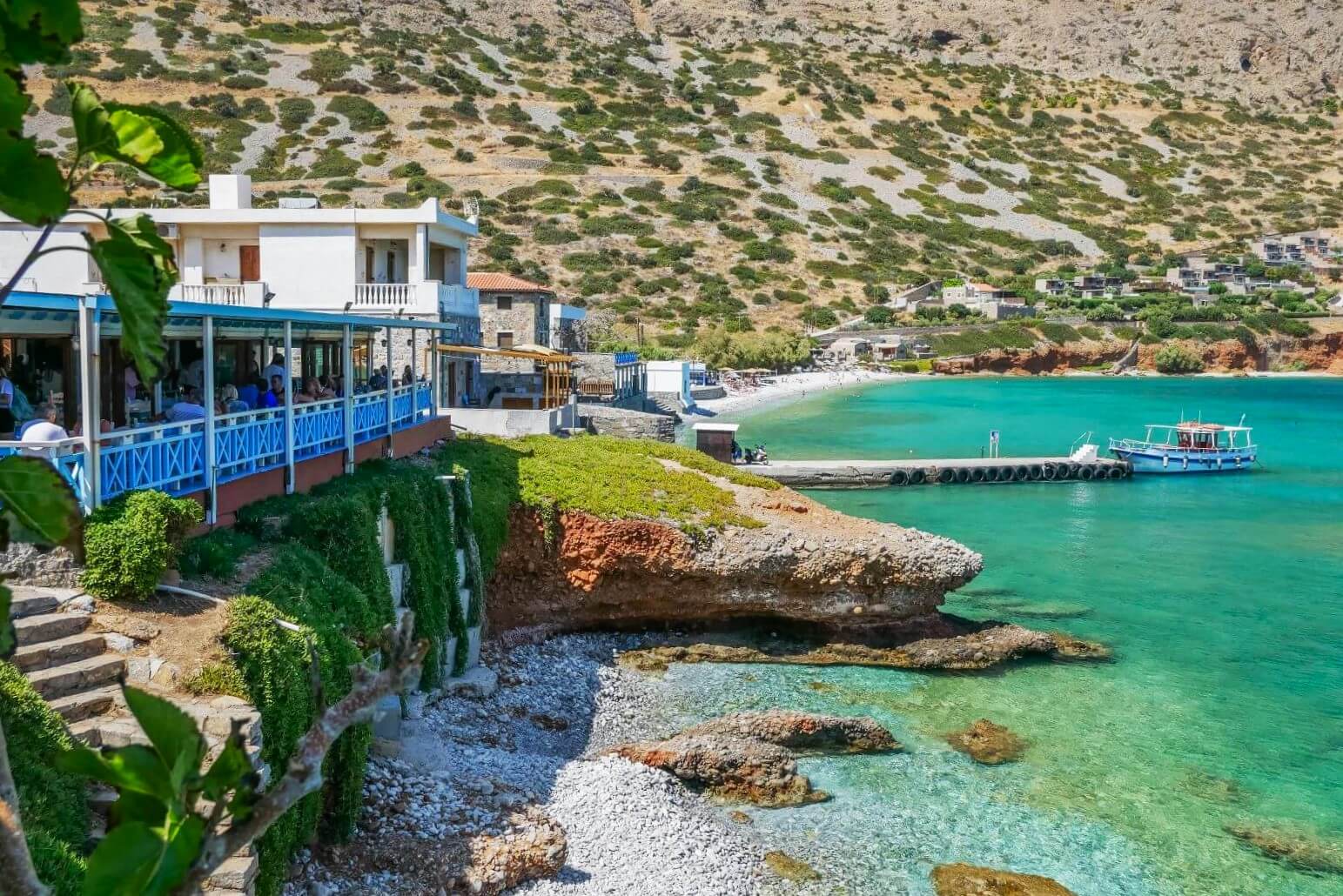
Five kilometers north of Elounda, Plaka (population roughly 100 permanent residents) exists primarily because Spinalonga Island sits 500 meters offshore. Boats depart constantly for the former leper colony, but the village itself remains stubbornly functional rather than picturesque-on-purpose.
The beach is white pebbles, not sand—bring water shoes. Two sunbeds and an umbrella cost €15 (2024 rates), parking is free, and the tavernas serve fresh seafood because fishing still happens here. The view across to Spinalonga's Venetian fortress is legitimately spectacular, especially at sunset when tour groups have left and you're dining among Greeks who drove down from Agios Nikolaos for the evening.
This isn't undiscovered—Plaka gets plenty of visitors. But it hasn't been rebuilt to look like itself, which makes all the difference.
4. Matala: Where the Hippie Era Actually Left Its Mark
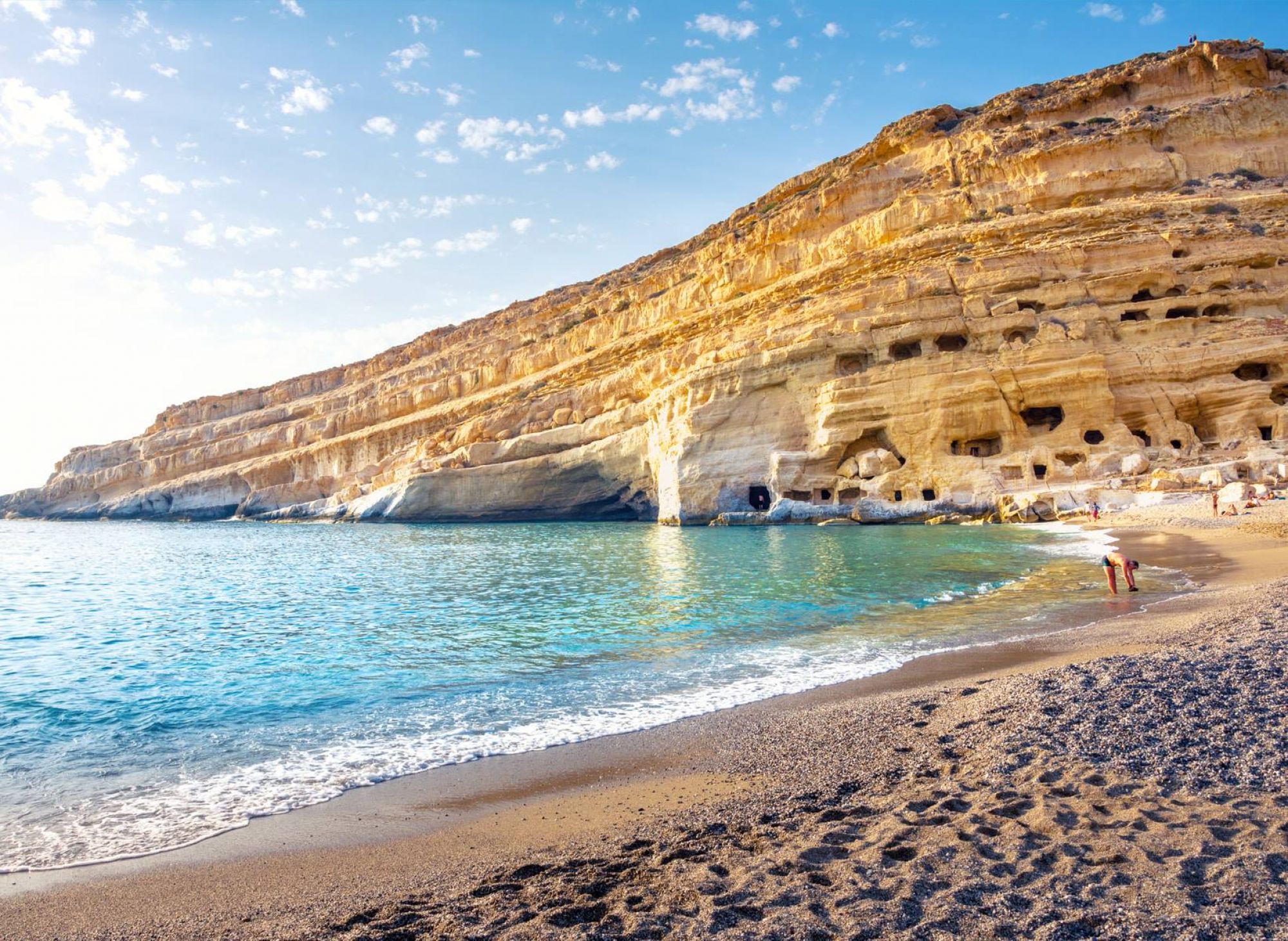
Most European "hippie beaches" have scrubbed away their counterculture past. Matala kept the murals. This southern-coast village (100 permanent residents) became famous in the 1960s-70s when dropouts lived in Roman-carved caves along the beach. Joni Mitchell wrote about it; authorities eventually evicted everyone in the mid-1970s.
Today those caves are an archaeological site (€2 entry, open 10am daily), but the village hasn't gentrified away its bohemian character. Volkswagen vans still appear painted with flowers, street art covers staircases, and the annual Matala Beach Festival (July 5-7, 2024; free entry) draws 70,000+ people for three days of live music directly on the sand.
The beach itself is 300 meters of golden sand with clear water, though the seabed center is rocky. Parking costs €3/day. Visit between April-June or September for warm weather without the August crowds—many local businesses close November-March.

5. Chania: Yes, But Do It Right
Including Chania might seem like cheating, but here's the thing: locals still live here. They just don't spend much time in the harbor area where cruise passengers congregate. The Municipal Market (built 1913) is where actual shopping happens—bring cash, arrive mornings. Splatzia Square (officially 1821 Square) fills with neighborhood Greeks, not guided tours.
The old town gets 40,000 daily visitors in peak season, so timing matters. Early morning (before 9am) or evening (after 7pm) transforms the experience. Walk away from the lighthouse toward the residential neighborhoods behind the Venetian walls. The UNESCO designation refers to the fortress, not the restaurant row—locals know the difference.
Chania works as a base for exploring western Crete, with frequent buses to Rethymno (€8, 1 hour) and surrounding villages. Just don't expect locals to be impressed when you mention you've been there.
Crete's charm isn't in choosing between tourist towns and "authentic" villages—it's in understanding that some places manage to be both. These five towns still function as communities where people live year-round, not just summer backdrops. The photos will be equally good; the experience significantly better.